How to Build Your First K-Beauty Product Assortment
Build a first K-beauty shortlist by customer, channel and routine role. Compare overlapping items and prepare questions for sourcing or development.
Read the storyTHE PRODUCT EDIT
From writing a brief to choosing formulations and comparing samples. Practical guidance for developing and selecting products.
Build a first K-beauty shortlist by customer, channel and routine role. Compare overlapping items and prepare questions for sourcing or development.
Read the storyMORE STORIES
On a Korean cosmetic label the precautions for use are decided by the product type and the formula, not by the design. This guide reads the provisions directly: the four common statements every cosmetic carries, the fourteen type-based and fifteen ingredient-based groups in Attached Table 1 of the MFDS notification, the bracketed conditions that turn on concentration and container, the two products that are not reduced even on a small pack, the accompanying-document route for long statement sets, and how fines and item sales suspensions are structured when a statement is missing.
Listing a cosmetic on your own shop or a Korean open market adds a second list that is not the label. This guide reads the provisions directly: the eleven cosmetics entries required by the Act on Consumer Protection in Electronic Commerce and the Fair Trade Commission notice, why a shortened label ingredient list does not shorten the product page, why the mail-order business operator marks the selling price, how liability divides on an open market, and what the review-disclosure provision in force since July 2026 requires.
In Korea what you may leave off a cosmetics label is decided by the size and the purpose of the pack, not by the design. This guide reads the provisions directly: why a pack of 10 mL or less and a tester drop to five entries, which six ingredient groups still have to stay in the band above 10 mL and up to 50 mL, what you owe in return when you omit ingredients, who actually marks the price, and how the fines, administrative fines and item sales suspensions are structured when the label is wrong.
In Korea the SPF on a sunscreen is not chosen during formulation. It is measured on human subjects and then reduced by a prescribed method before it may be printed. This guide reads the provisions directly: how ultraviolet products split under the Enforcement Rule, when an item goes to review and when it may be reported instead, how SPF, the PA grade and water resistance are each measured and displayed, which conditions open the reduced-submission route, and what the outcome puts on the label and limits in advertising.
Korea's national certification for natural and organic cosmetics was repealed in 2025: the certifying articles, the statutory definitions and the standards notification are all gone. This guide reads the provisions as written, covering what was deleted, how long an existing certificate stays valid, the packaging duty that still requires the raw material content behind a natural or organic claim, and the general prohibition and substantiation duty that now decide whether the wording is lawful.
Labelling or advertising a cosmetic as usable by infants or children triggers the three product-specific safety material sets under Article 4-2(1) of the Korean Cosmetics Act. This guide reads the provisions as written: the age brackets, which labelling and which advertising media flip the switch, what belongs in each document set, how long the materials have to be kept, the preservative content line added to the package, the raw materials restricted in infant and child products, and the administrative and criminal consequences of missing the duty.
Mixing or decanting cosmetics inside a store is a separate notified business in Korea called customized cosmetics selling. This guide reads the provisions as written: the two statutory forms of a customized cosmetic, the ban on arbitrarily decanting finished products, the notification and facility requirement, the compounding manager, how permitted raw materials are defined by exclusion, the sales record and annual raw material report, the labelling items that change, and what the party supplying the bulk contents has to prepare.
A finished-product test report speaks only to the items tested. Korean distribution cosmetics safety standards layer product-type requirements over detection limits for unintentionally derived substances, microbial limits and content volume. This guide reads Article 6 and Attached Table 4 of the MFDS regulation, then follows the batch-by-batch quality testing duty and its outsourcing proviso to show what a brand should check before release.
Formula and packaging get settled early, while registration tends to come up just before launch. That order is backwards. This article reads Korea's cosmetics registration scheme in its own words: why manufacturing and responsible distribution are registered while customised cosmetics sales is notified, why commissioning all production still leaves the responsible distribution registration with the brand, the facility standard and its two exemptions, who may serve as responsible distribution manager, who is barred from registering, and the 30-day change filing.
The first thing a brand hears about a Korean manufacturer is that it is a CGMP conforming establishment, yet a photograph of a certificate says little about what was assessed or when. This article reads Korea's Good Manufacturing Practice notification in its own words: why the standard is recommended rather than mandatory, how an application becomes an on-site inspection and a decision, the four entries a certificate carries, the difference between all processes and part of the processes, what stands in place of a validity period, and why ISO 22716 is absent from the main text.
Choosing a container and a gift-set carton in Korea pulls in duties the Cosmetics Act does not address. They come from the Act on the Promotion of Saving and Recycling of Resources and run in three lines: limits on packaging space ratio and layers, a material and structure assessment whose grade has to be printed, and the separate-disposal mark. This article sets out which party each line binds, what makes packaging difficult to recycle, the figures and reliefs written specifically for cosmetics, and the fines and orders that follow a breach.
When an ingredient is chosen, a specification sheet and a test report arrive from the supplier, and both are easily read as permission to use the material. What the Cosmetics Act and its Enforcement Rule require is not a document name but testing and inspection from the receipt of raw materials through to release of the finished product, and the documents a responsible distributor must keep once received are limited to two. Here is who may issue a report on the statutory form, what that form must contain, how far its judgment reaches, and how long records and samples are kept.
Recalls are the last thing a brand checks when it commissions manufacturing, and the first thing that exposes how the paperwork was arranged. Article 5-2 of the Cosmetics Act attaches the recall duty to the statutory status of "business operator" rather than to a contract, and the Enforcement Rule sets a five-day recall plan, recall periods of 15 or 30 days by hazard grade, the publication route, and the scale on which a diligent recall reduces or waives an administrative sanction. Here is the order the provisions set, and what to settle in the development agreement first.
When an overseas distributor proposes finished-goods supply directly to a Korean brand owner, the first fork is not quantity but which provisions apply. Article 30 of the Cosmetics Act sets aside a listed group of provisions for products that are not sold domestically and are intended solely for export, while business registration, the duties of a business operator and the ban on improper labelling and advertising all remain. Here is what the exception waives, what it leaves in place, and which records a buyer can actually ask for.
Can a product made in Korea say "Made in Korea"? On a cosmetics label, origin is set by the Foreign Trade Act rather than the Cosmetics Act, and it turns on three criteria: wholly obtained goods, substantial transformation, and simple processing. Here is how the provisions differ between exports and domestic distribution, and which test cosmetics are excluded from.
When a brand outsources development, who ends up owning the formula? Korean cosmetics law settles the flow of documents, not the ownership. Here is when trade-secret protection, the limits on demanding technical data, and technical-data escrow each apply, and what the agreement has to cover on top.
One concept, two textures. Under the Korean standards a rinse-off body wash and a leave-on body lotion diverge on permitted materials, permitted concentrations, fragrance allergen labelling, precautionary statements and claims. Here is where each boundary sits.
An ingredient wish list has to clear four checks before it becomes a formula: whether the material may be used in Korea at all, what limit applies in the product type you chose, whether it entitles you to the wording you want on the package, and what the choice leaves on the ingredient list. Based on the Cosmetics Act in force, its Enforcement Rule and the current notices of the Ministry of Food and Drug Safety.
The choice between an existing base formula and a new custom formulation changes more than the development calendar. Based on Korea's Cosmetics Act and Enforcement Rule, this guide maps ordinary- and functional-cosmetic routes, raw-material rules, stability guidance and product-specific safety records.
Compare branded product sourcing with OEM/ODM, shortlist products and prepare the right questions for your EVAS consultation.
In Korea a product claim is settled less by whether the wording is permitted than by whether you can substantiate it. Based on the Cosmetics Act in force, Attached Table 5 to its Enforcement Rule and the Ministry of Food and Drug Safety substantiation notice, here is what can never be said, what counts as evidence, which eight expressions have their evidence type fixed in advance, and what happens once the regulator asks.
Korean law does not hand you a number of months for a cosmetic expiry date or period after opening. Based on the current Cosmetics Act, its Enforcement Rule and the MFDS stability-testing guideline, here is where the two values come from, how each must be printed, and which records have to be kept and for how long.

Outsourcing manufacturing in Korea does not move every duty. Based on the current Cosmetics Act and its Enforcement Rule, here is where the manufacturer’s duties end, what stays with the brand as responsible distributor, and what changes between turnkey and customer-supplied materials.
Selling the same shampoo on a hair-loss relief claim in Korea means going through a per-item functional-cosmetic review or report. Based on the current Act and MFDS notices, here is what actually changes and what to settle in the brief.
Packaging is a development variable assessed alongside the formulation, not a finishing touch. Based on Korean MFDS stability-testing guidance and the Cosmetics Act, here is when to fix the container and what changes with its format.
MOQ moves on four separate conditions, while registration, per-batch testing, labelling and reporting do not shrink with the quantity.
A brief is a record of decisions, not a list of preferences. What the responsible distributing business, the functional claim, the sales territory, infant and child labeling, and the volume with its primary packaging each unlock, plus a one-page brief template.
What each stage of a Korean cosmetics development project locks in, and the five decisions that reopen a procedure if you change them later.
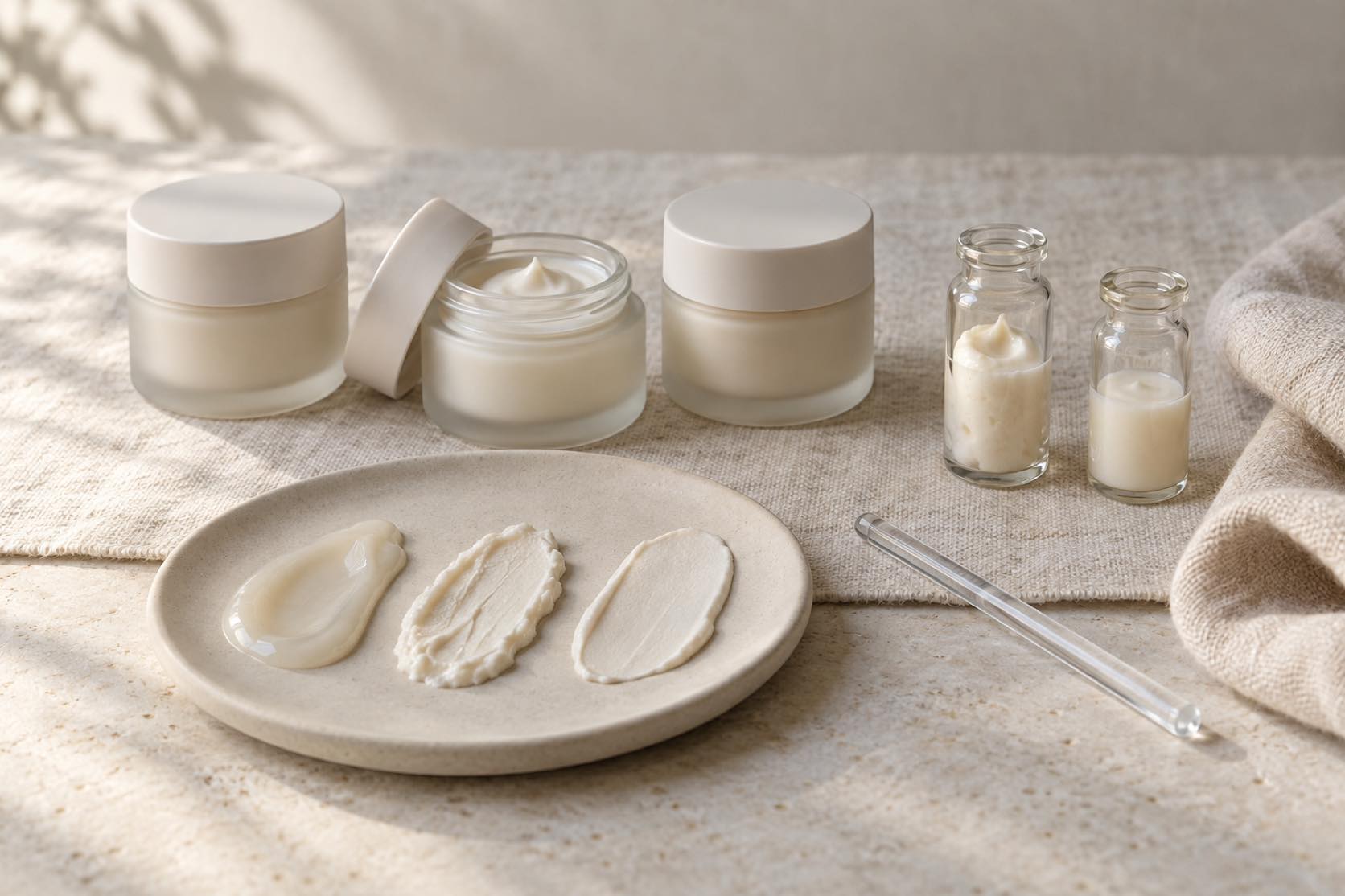
How to compare samples under identical conditions and change one thing at a time, and which provision each costly decision is attached to: functional claims, fragrance, container and shelf life.